

Inside Etihad Rail: UAE’s first intercity passenger train to connect Dubai and Abu Dhabi by 2026
UAE’s first passenger train network to connect 11 cities, carrying 36.5 million riders yearly

DUBAI: The UAE’s ambitious Etihad Rail project continues to advance rapidly, with the launch of its intercity passenger train service scheduled for 2026.
Designed to link the nation’s major cities and regions, the service will dramatically reduce travel times and set a new benchmark for sustainable mobility across the Emirates. Trains will connect Abu Dhabi and Dubai in under an hour, with future extensions to Sharjah, Fujairah, and beyond.
Just over the weekend, His Highness Sheikh Mohammed bin Rashid Al Maktoum, Vice President and Prime Minister of the UAE and Ruler of Dubai, took a historic journey on the passenger train from Dubai to Fujairah. The visit underlined the leadership’s direct involvement in national infrastructure development and its commitment to building a connected, efficient future.

Describing the railway as “a vital economic artery,” Sheikh Mohammed noted its role in supporting national unity, sustainability, and economic diversification.
What is Etihad Rail?
Etihad Rail is the UAE’s national railway network, aimed at integrating freight and passenger transport across the country. The passenger train project is one of the region’s most significant infrastructure initiatives, designed to connect 11 cities and regions, from Al Sila in the west to Fujairah in the east.

Developed to the highest global standards, the trains will operate at speeds of up to 200 km/hr and carry up to 400 passengers per trip. Once complete, the network is expected to handle 36.5 million passengers annually by 2030.

The rail line will provide safe, reliable, and eco-friendly travel options, cutting road congestion while boosting tourism and regional development.
How will it operate?
Commercial operations for the passenger service are scheduled to begin in 2026, with four major stations in the initial phase – Abu Dhabi, Dubai, Sharjah and Fujairah.

These hubs will act as central points for passengers, with integrated links to metros, buses and taxis. Future plans include expanding the network to connect with Oman and additional UAE cities.
Etihad Rail’s infrastructure includes modern rolling stock equipped with high levels of passenger comfort, operational safety and low environmental impact. The trains will be powered by advanced technology and designed to meet international standards in rail transport efficiency.
During his visit, HH Sheikh Mohammed was briefed on the construction and operational progress by senior Etihad Rail executives. The team highlighted the significance of the journey as a key milestone in the project’s timeline, with Chairman Sheikh Theyab bin Mohamed bin Zayed Al Nahyan noting the leadership’s consistent support since the project was announced in the “Projects of the 50” in 2021.
Where will it take us?
The passenger service will provide seamless connectivity across the Emirates. Travellers will be able to move between major cities faster than ever before, slashing the Dubai–Abu Dhabi journey time to under 60 minutes.
The entire route – from Al Sila to Fujairah – will allow people to travel across the UAE in under two hours.
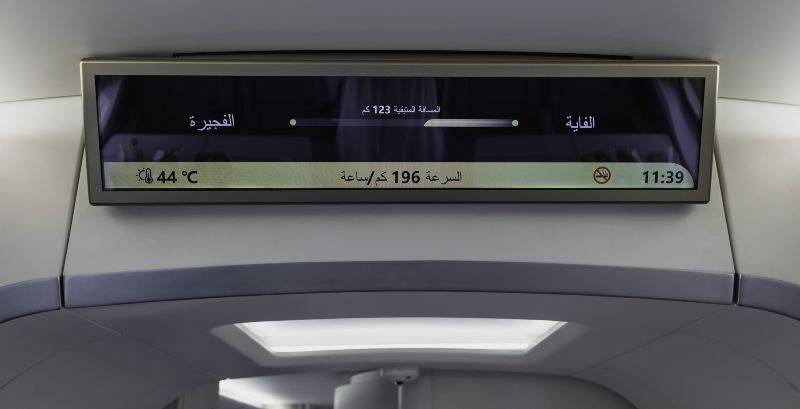
Apart from serving daily commuters, the railway is expected to boost tourism and social development by improving access to emerging destinations. It also supports the UAE’s long-term transport vision, aligning with national goals to achieve net-zero emissions by 2050.
Once operational, Etihad Rail will offer an attractive alternative to road travel, strengthening the UAE’s global competitiveness and reinforcing its position as a leader in regional transport innovation.